07: Classes and Instances
Audience: All (with beginner sidebar) Time: 120 minutes Prerequisites: 01-06 You'll learn: Define classes, instantiate objects, instance methods, fields, initialization
The Big Picture
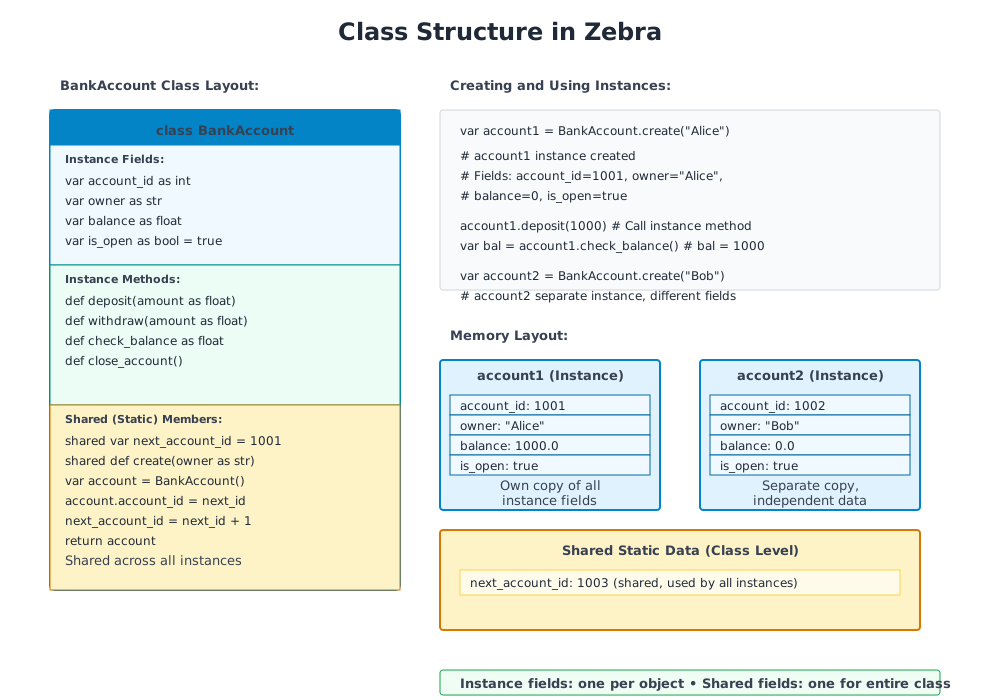
Classes are blueprints for objects. Instead of a loose collection of variables, a class groups related data and behavior together.
Real world: A car has properties (color, speed) and behaviors (accelerate, brake)
Code: A Car class has fields (color, speed) and methods (accelerate, brake)
Defining Classes
Simple Class
// file: 07_class_basic.zbr
// teaches: class definition // chapter: 07-Classes-and-Instances
class Person     var name as str     var age as int
    def greet         print "Hi, I'm ${name}"
class Main     shared         def main             var person = Person()             person.name = "Alice"             person.age = 30             person.greet()  // Hi, I'm Alice
Breakdown: - class Person — Define a class named Person - var name as str — Field (property) of the class - def greet — Method of the class - Person() — Create an instance
Fields and Initialization
// file: 07_init.zbr
// teaches: field initialization // chapter: 07-Classes-and-Instances
class Rectangle     var width as int = 0     var height as int = 0
    def area as int         return width * height
class Main     shared         def main             var rect = Rectangle()             rect.width = 10             rect.height = 5             print rect.area()  // 50
Instance Methods
// file: 07_methods.zbr
// teaches: instance methods // chapter: 07-Classes-and-Instances
class Counter     var count as int = 0
    def increment         count = count + 1
    def decrement         count = count - 1
    def reset         count = 0
    def get_count as int         return count
class Main     shared         def main             var counter = Counter()             counter.increment()             counter.increment()             counter.increment()             print counter.get_count()  // 3             counter.reset()             print counter.get_count()  // 0
Shared Methods (Class Methods)
// file: 07_shared.zbr
// teaches: shared (class) methods // chapter: 07-Classes-and-Instances
class Math     shared         def abs(x as int) as int             if x < 0                 return 0 - x             return x
        def max(a as int, b as int) as int             if a > b                 return a             return b
class Main     shared         def main             print Math.abs(-5)      // 5             print Math.max(10, 20)  // 20
If you're new to programming
> A class is like a template. When you create an instance (with Person()), you're making a specific copy from that template. > > Fields are the properties (like name, age) > > Methods are the behaviors (like greet()) > > Instance methods work on a specific object (person.greet()) > > Shared methods belong to the class itself (Math.abs())
Real World: User Management
// file: 07_user_system.zbr
// teaches: realistic class design // chapter: 07-Classes-and-Instances
class User     var username as str = ""     var email as str = ""     var created_at as str = ""     var is_active as bool = true
    def is_valid as bool         return username.len > 0 and email.contains("@")
    def deactivate         is_active = false
    def display_profile         print "User: ${username}"         print "Email: ${email}"         print "Active: ${is_active}"
class UserManager     shared         var users as List(User) = List()
        def add_user(user as User) as bool             if not user.is_valid                 return false             users.add(user)             return true
        def find_user(username as str) as User?             for user in users                 if user.username == username                     return user             return nil
        def user_count as int             return users.count()
class Main     shared         def main             var user1 = User()             user1.username = "alice"             user1.email = "alice@example.com"
            if UserManager.add_user(user1)                 print "User added"
            var found = UserManager.find_user("alice")             if found != nil                 found.display_profile()
Common Patterns
Value Object
class Point
    var x as int = 0     var y as int = 0
    def distance_from_origin as float         return 0.0  # sqrt(xx + yy)
Service Class
class EmailService
    shared         def send(to as str, subject as str, body as str) as bool             # Implementation             return true
Builder Pattern
class UserBuilder
    var username as str = ""     var email as str = ""     var age as int = 0
    def set_username(name as str)         username = name
    def set_email(addr as str)         email = addr
    def build as User         var user = User()         user.username = username         user.email = email         return user
Common Mistakes
> ❌ Mistake: Forgetting to initialize fields > >
> class Person > var name as str # No default value > var p = Person() > print p.name # ❌ Uninitialized! > > class Person > var name as str = "" # Has default > > ❌ Mistake: Modifying shared fields unintentionally > >
> class Counter > shared var count as int = 0 > > def reset > count = 0 # Affects ALL instances! > > class Counter > var count as int = 0 # Instance field > > def reset > count = 0 # Only this instance > Exercises
Exercise 1: Bank Account
Create a BankAccount class with deposit and withdraw methods:
Solution
class BankAccount
    var balance as float = 0.0     var account_number as str = ""
    def deposit(amount as float)         balance = balance + amount
    def withdraw(amount as float) as bool         if amount > balance             return false         balance = balance - amount         return true
    def get_balance as float         return balance
class Main     shared         def main             var account = BankAccount()             account.account_number = "1234567890"             account.deposit(1000.0)             print "Balance: ${account.get_balance()}"             account.withdraw(100.0)             print "Balance: ${account.get_balance()}"
Exercise 2: Product Catalog
Create a Product class and a simple store:
Solution
class Product
    var name as str = ""     var price as float = 0.0     var quantity as int = 0
    def total_value as float         return price * quantity
class Store     var products as List(Product) = List()
    def add_product(product as Product)         products.add(product)
    def total_inventory_value as float         var total = 0.0         for product in products             total = total + product.total_value()         return total
class Main     shared         def main             var store = Store()
            var apple = Product()             apple.name = "Apple"             apple.price = 0.50             apple.quantity = 100             store.add_product(apple)
            var orange = Product()             orange.name = "Orange"             orange.price = 0.75             orange.quantity = 80             store.add_product(orange)
            print "Total value: ${store.total_inventory_value()}"
Next Steps
- → 08-Interfaces — Contracts for classes - → 09-Inheritance — Class hierarchies - 🏋️ Project-2-HTTP-Server — Use classes extensively
Key Takeaways
- Classes group data and behavior — Fields + methods - Instances are copies — Each Person() is independent - Instance methods work on specific objects - Shared methods belong to the class, not instances - Initialize fields — Don't leave them undefined - Methods should have clear names — deposit() not d()
Next: Head to 08-Interfaces to define contracts between classes.