09: Inheritance and Mixins
Audience: All Time: 120 minutes Prerequisites: 07-Classes, 08-Interfaces You'll learn: Extend classes, override methods, super calls, mixins, hierarchies
The Big Picture
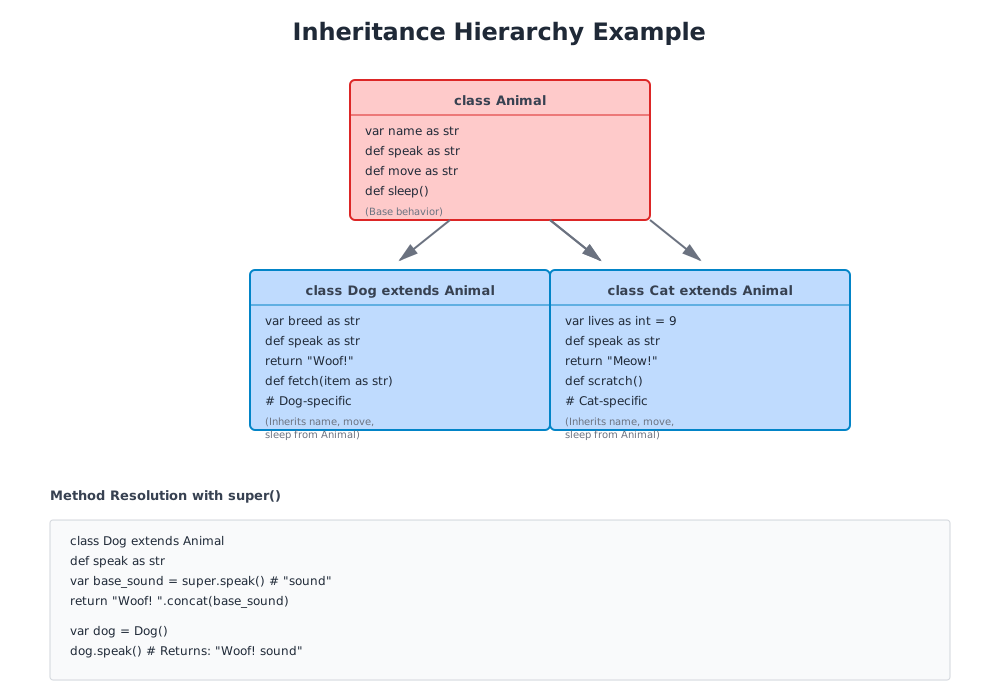
Inheritance lets classes extend other classes, sharing code and building hierarchies. Instead of duplicating code, parent classes provide common functionality that children specialize.
Animal (parent)
├── Dog (specializes in dogs) ├── Cat (specializes in cats) └── Bird (specializes in birds)
Basic Inheritance
Extending a Class
// file: 09_inheritance_basic.zbr
// teaches: class inheritance // chapter: 09-Inheritance-and-Mixins
class Animal     var name as str = ""     var age as int = 0
    def greet         print "I'm ${name}, ${age} years old"
class Dog     inherits Animal         def bark             print "${name} says: Woof!"
class Cat     inherits Animal         def meow             print "${name} says: Meow!"
class Main     shared         def main             var dog = Dog()             dog.name = "Buddy"             dog.age = 3             dog.greet()      // I'm Buddy, 3 years old             dog.bark()       // Buddy says: Woof!
            var cat = Cat()             cat.name = "Whiskers"             cat.age = 2             cat.greet()      // I'm Whiskers, 2 years old             cat.meow()       // Whiskers says: Meow!
Key points: - inherits Animal — Dog extends Animal - Inherits fields (name, age) and methods (greet) - Can add new methods (bark, meow)
Method Overriding
// file: 09_override.zbr
// teaches: overriding parent methods // chapter: 09-Inheritance-and-Mixins
class Animal     def speak as str         return "Some sound"
class Dog     inherits Animal         def speak as str  // Override parent method             return "Woof!"
class Cat     inherits Animal         def speak as str  // Different implementation             return "Meow!"
class Main     shared         def main             var dog = Dog()             print dog.speak()  // Woof!
            var cat = Cat()             print cat.speak()  // Meow!
Super Calls (Calling Parent Methods)
// file: 09_super.zbr
// teaches: calling parent implementation // chapter: 09-Inheritance-and-Mixins
class Vehicle     var speed as int = 0
    def accelerate         speed = speed + 10         print "Accelerating to ${speed} mph"
class Car     inherits Vehicle         def accelerate  // Override but call parent             # First call parent implementation             super.accelerate()             # Then add custom behavior             print "Car is now cruising smoothly"
class Main     shared         def main             var car = Car()             car.accelerate()             // Accelerating to 10 mph             // Car is now cruising smoothly
Hierarchies
Multi-Level Inheritance
// file: 09_hierarchy.zbr
// teaches: inheritance hierarchies // chapter: 09-Inheritance-and-Mixins
class Animal     var name as str = ""     def sound as str         return "?"
class Mammal     inherits Animal         def warm_blooded as bool             return true
class Dog     inherits Mammal         def sound as str             return "Woof!"
class Main     shared         def main             var dog = Dog()             dog.name = "Buddy"             print dog.name             // Buddy             print dog.sound()          // Woof!             print dog.warm_blooded()   // true
Treating as Parent Type
// file: 09_polymorphic_hierarchy.zbr
// teaches: treating children as parents // chapter: 09-Inheritance-and-Mixins
class AnimalShelter     var animals as List(Animal) = List()
    def add_animal(animal as Animal)         animals.add(animal)
    def announce_arrivals         for animal in animals             print "We have ${animal.name}"             print "It says: ${animal.sound()}"
class Main     shared         def main             var shelter = AnimalShelter()
            var dog = Dog()             dog.name = "Rex"             shelter.add_animal(dog)
            var cat = Cat()             cat.name = "Mittens"             shelter.add_animal(cat)
            shelter.announce_arrivals()
Mixins
Mixins let you compose behavior from multiple sources without deep inheritance chains.
// file: 09_mixins.zbr
// teaches: mixin composition // chapter: 09-Inheritance-and-Mixins
class Swimmer     def swim         print "Swimming!"
class Runner     def run         print "Running!"
class Duck     inherits Swimmer         var name as str = ""
        def quack             print "${name} quacks!"
class Dog     inherits Swimmer         var name as str = ""         def bark             print "${name} barks!"
class Athlete     inherits Runner         var name as str = ""         def compete             run()             print "${name} is competing!"
class Main     shared         def main             var duck = Duck()             duck.name = "Donald"             duck.swim()        // Swimming!             duck.quack()       // Donald quacks!
            var dog = Dog()             dog.name = "Buddy"             dog.swim()         // Swimming!             dog.bark()         // Buddy barks!
            var athlete = Athlete()             athlete.name = "Alice"             athlete.compete()  // Running! Alice is competing!
Real World: Document Hierarchy
// file: 09_document_hierarchy.zbr
// teaches: realistic inheritance use // chapter: 09-Inheritance-and-Mixins
class Document     var title as str = ""     var content as str = ""     var created_at as str = ""
    def preview as str         var lines = content.split("\n")         if lines.count() > 3             return lines.at(0).concat("\n").concat(lines.at(1)).concat("\n").concat(lines.at(2))         return content
class BlogPost     inherits Document         var author as str = ""         var tags as List(str) = List()
        def get_summary as str             return "Posted by ${author}: ${preview()}"
class Report     inherits Document         var department as str = ""         var sections as List(str) = List()
        def is_complete as bool             return sections.count() > 0
class Main     shared         def main             var post = BlogPost()             post.title = "Learning Zebra"             post.content = "Zebra is awesome\nLine 2\nLine 3\nLine 4"             post.author = "Alice"             post.tags.add("programming")             print post.get_summary()
            var report = Report()             report.title = "Q1 Report"             report.department = "Engineering"             report.sections.add("Achievements")             report.sections.add("Challenges")             print "Report complete: ${report.is_complete()}"
Common Patterns
Template Method Pattern
class DataProcessor
    def process(data as str)         var cleaned = clean(data)         var transformed = transform(cleaned)         var validated = validate(transformed)         return validated
    def clean(data as str) as str         return data.trim()
    def transform(data as str) as str         return data.upper()
    def validate(data as str) as bool         return data.len > 0
class CustomProcessor     inherits DataProcessor         def transform(data as str) as str             return data.lower()  // Override just this step
Factory Pattern
class AnimalFactory
    shared         def create(kind as str) as Animal             if kind == "dog"                 return Dog()             elif kind == "cat"                 return Cat()             else                 return Animal()
If you're new to programming
> Inheritance is like saying "Dog is a type of Animal." Dogs have everything animals have, plus their own special abilities. > > Override means giving your own version of a method. Even though Animal has a speak method, Dog can have its own version that says "Woof!" > > Super is saying "run the parent's version first, then my custom version."
Common Mistakes
> ❌ Mistake: Forgetting to call super > >
> class Car > inherits Vehicle > def accelerate > print "Car accelerating" // ❌ Forgot super.accelerate() > > class Car > inherits Vehicle > def accelerate > super.accelerate() // ✅ Call parent first > print "Car accelerating" > > ❌ Mistake: Deep inheritance chains > >
> class A; inherits B > class B; inherits C > class C; inherits D > class D; inherits E # ❌ Too deep, hard to understand > > ❌ Mistake: Overriding with wrong signature > >
> class Animal > def speak as str > > class Dog > inherits Animal > def speak(volume as int) as str # ❌ Wrong signature > > class Dog > inherits Animal > def speak as str # ✅ Same signature > return "Woof!" > Exercises
Exercise 1: Vehicle Hierarchy
Create a vehicle hierarchy with cars, motorcycles, and trucks:
Solution
class Vehicle
    var brand as str = ""     var year as int = 0
    def start_engine         print "Starting engine"
    def info as str         return "${year} ${brand}"
class Car     inherits Vehicle         var doors as int = 4
        def start_engine             super.start_engine()             print "Car engine started"
class Motorcycle     inherits Vehicle         def start_engine             super.start_engine()             print "Motorcycle engine roared to life"
class Main     shared         def main             var car = Car()             car.brand = "Toyota"             car.year = 2023             print car.info()        // 2023 Toyota             car.start_engine()      // Starting engine / Car engine started
            var bike = Motorcycle()             bike.brand = "Harley"             bike.year = 2022             bike.start_engine()     // Starting engine / Motorcycle engine roared to life
Exercise 2: Employee Hierarchy
Create an employee hierarchy (Employee → Manager → Director):
Solution
class Employee
    var name as str = ""     var salary as float = 0.0
    def get_info as str         return "${name}: ${salary}"
class Manager     inherits Employee         var team_size as int = 0
        def get_info as str             return super.get_info().concat(" (Managing ${team_size} people)")
class Director     inherits Manager         var budget as float = 0.0
        def get_info as str             return super.get_info().concat(" (Budget: ${budget})")
class Main     shared         def main             var emp = Employee()             emp.name = "Alice"             emp.salary = 50000.0             print emp.get_info()
            var mgr = Manager()             mgr.name = "Bob"             mgr.salary = 70000.0             mgr.team_size = 5             print mgr.get_info()
            var dir = Director()             dir.name = "Carol"             dir.salary = 100000.0             dir.team_size = 20             dir.budget = 1000000.0             print dir.get_info()
Exercise 3: Shape Hierarchy
Extend the shape interface from Chapter 08 with inheritance:
Solution
interface Shape
    def area as float     def perimeter as float
class BaseShape     implements Shape         def area as float             return 0.0         def perimeter as float             return 0.0
class Circle     inherits BaseShape         var radius as float = 0.0
        def area as float             return 3.14  radius  radius
        def perimeter as float             return 2.0  3.14  radius
class Rectangle     inherits BaseShape         var width as float = 0.0         var height as float = 0.0
        def area as float             return width * height
        def perimeter as float             return 2.0 * (width + height)
class Main     shared         def main             var shapes as List(Shape) = List()
            var circle = Circle()             circle.radius = 5.0             shapes.add(circle)
            var rect = Rectangle()             rect.width = 10.0             rect.height = 5.0             shapes.add(rect)
            for shape in shapes                 print "Area: ${shape.area()}"
Next Steps
- → 10-Properties — Getters, setters, computed values - → 14-Contracts — Enforce invariants across hierarchies - 🏋️ Project-1-CLI-Tool — Use hierarchies for options/commands
Key Takeaways
- Inheritance creates hierarchies — Specialize parent classes - Override methods to customize behavior in child classes - Super calls let you extend parent functionality - Keep hierarchies shallow — 2-3 levels is healthy - Treat as parent type for polymorphism - Mixins compose behavior without deep chains
Next: Head to 10-Properties to control field access with getters and setters.