11: Nil Tracking and Safety
Audience: All Time: 120 minutes Prerequisites: 02-Values, 05-Control-Flow, 07-Classes You'll learn: Nullable types, nil checking, type narrowing, the to! operator, optionals
The Big Picture
Nil (null/nothing) is one of the most common sources of bugs. Zebra's nil tracking forces you to handle it:
> "A billion-dollar mistake." — Tony Hoare, on inventing the null reference
Zebra says: Explicit nil is safe. Implicit nil is forbidden.
Nullable Types
Marking Optionality
// file: 11_nullable.zbr
// teaches: nullable types // chapter: 11-Nil-Tracking-and-Safety
class User     var name as str      # Can't be nil     var nickname as str? # Can be nil     var bio as str?      # Can be nil
class Main     shared         def main             var user = User()             user.name = "Alice"    # ✅ Fine             user.nickname = nil    # ✅ Allowed (it's str?)             user.bio = "Developer" # ✅ Can assign string to str?
            # This won't compile:             # var empty as str = nil  # ❌ str can't be nil
Key point: The ? mark means "this can be nil or the type."
Nil Checking
Safe Access Pattern
// file: 11_nil_check.zbr
// teaches: nil checking // chapter: 11-Nil-Tracking-and-Safety
class Main     shared         def main             var nickname as str? = "Bobby"             var empty as str? = nil
            # Check before using             if nickname != nil                 print nickname     # Safe: known to not be nil
            if empty == nil                 print "No nickname set"             else                 print empty
            # Two ways to check:             if nickname != nil                 print "Has nickname"
            if nickname == nil                 print "No nickname"             else                 print "Has: ${nickname}"
Type Narrowing
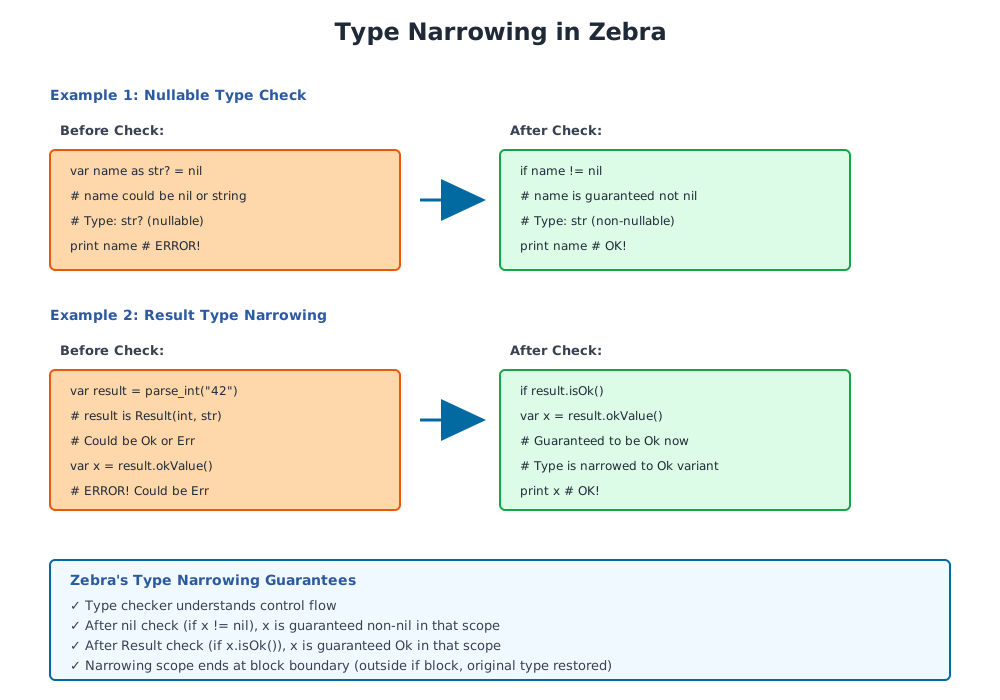
After checking, the type is narrowed:
// file: 11_narrowing.zbr
// teaches: type narrowing // chapter: 11-Nil-Tracking-and-Safety
class Main     shared         def process_name(input as str?)             if input == nil                 return  # Exit early if nil
            # From here, input is narrowed to str             print input.len        # ✅ Safe: know it's str             print input.upper()    # ✅ Safe
The to! Operator (Unwrap)
Warning: Only use when you're absolutely certain the value isn't nil.
// file: 11_unwrap.zbr
// teaches: unwrap operator // chapter: 11-Nil-Tracking-and-Safety
class Main     shared         def main             var name as str? = "Alice"
            # Unwrap: assert it's not nil             var safe_name = name to!             print safe_name        # Now just str
            # If it WAS nil, this would crash             var empty as str? = nil             # var crash = empty to!  # ❌ Would panic at runtime
Unwrap with Fallback
// file: 11_unwrap_or.zbr
// teaches: safe unwrapping // chapter: 11-Nil-Tracking-and-Safety
class Main     shared         def get_user_name(user_id as int) as str?             if user_id == 1                 return "Alice"             return nil
        def main             var name = get_user_name(1)
            # Option 1: Check and use default             if name != nil                 print name             else                 print "Unknown user"
            # Option 2: if method exists, unwrapOr             # var safe_name = name.unwrapOr("Guest")             # print safe_name
Real World: Database Queries
// file: 11_database.zbr
// teaches: nil in realistic scenarios // chapter: 11-Nil-Tracking-and-Safety
class User     var id as int     var name as str     var email as str?
class UserDatabase     shared         def find_user(user_id as int) as User?             if user_id == 1                 var user = User()                 user.id = 1                 user.name = "Alice"                 user.email = "alice@example.com"                 return user             return nil
        def find_user_email(user_id as int) as str?             var user = find_user(user_id)             if user == nil                 return nil             return user.email
class Main     shared         def main             var user = UserDatabase.find_user(1)             if user != nil                 print user.name                 if user.email != nil                     print user.email                 else                     print "No email on file"             else                 print "User not found"
            # Chaining nil checks             var email = UserDatabase.find_user_email(999)             if email != nil                 print "Email: ${email}"             else                 print "User not found"
Common Patterns
Optional Chaining
def get_user_city(user_id as int) as str?
    var user = find_user(user_id)     if user == nil         return nil     var address = get_address(user.id)     if address == nil         return nil     return address.city
Guard Clauses
def process(data as str?)
    if data == nil         return     if data.len == 0         return     # Now process safely     do_work(data)
If you're new to programming
> Nil means "nothing" or "no value." Different languages call it null, None, undefined. > > Zebra makes you declare which variables can be nil with ?. This prevents accidental crashes. > > Type narrowing means the compiler recognizes that after you check if x != nil, you can safely use x.
Common Mistakes
> ❌ Mistake: Forgetting to check for nil > >
> var email as str? = get_email() > print email.len # ❌ Crash if email is nil! > > var email as str? = get_email() > if email != nil > print email.len # ✅ Safe > > ❌ Mistake: Using to! without certainty > >
> var value as str? = get_value() > print value to! # ❌ Crashes if value is nil > > var value as str? = get_value() > if value != nil > print value # ✅ Safe, or use unwrapOr > > ❌ Mistake: Assigning nil to non-nullable > >
> var name as str = nil # ❌ str can't be nil > > var name as str? = nil # ✅ Declares it can be nil > Exercises
Exercise 1: Find User Email
Write a function that safely retrieves a user's email:
Solution
class User
    var id as int     var name as str     var email as str?
class UserDB     shared         def find_user(id as int) as User?             if id == 1                 var user = User()                 user.id = 1                 user.name = "Alice"                 user.email = "alice@example.com"                 return user             return nil
        def get_email(user_id as int) as str?             var user = find_user(user_id)             if user == nil                 return nil             return user.email
class Main     shared         def main             var email = UserDB.get_email(1)             if email != nil                 print "Email: ${email}"             else                 print "User not found or no email"
Exercise 2: Safe Division
Write a division function that returns nil on error:
Solution
class Calculator
    shared         def safe_divide(a as float, b as float) as float?             if b == 0.0                 return nil             return a / b
class Main     shared         def main             var result = Calculator.safe_divide(10.0, 2.0)             if result != nil                 print "Result: ${result}"
            var bad = Calculator.safe_divide(10.0, 0.0)             if bad != nil                 print bad             else                 print "Cannot divide by zero"
Exercise 3: Nullable Chain
Write a function that navigates nullable fields:
Solution
class Profile
    var name as str     var bio as str?
class User     var id as int     var profile as Profile?
class UserService     shared         def get_user_bio(user_id as int) as str?             var user = find_user(user_id)             if user == nil                 return nil             var profile = user.profile             if profile == nil                 return nil             return profile.bio
        def find_user(id as int) as User?             if id == 1                 var user = User()                 user.id = 1                 var profile = Profile()                 profile.name = "Alice"                 profile.bio = "Developer"                 user.profile = profile                 return user             return nil
class Main     shared         def main             var bio = UserService.get_user_bio(1)             if bio != nil                 print "Bio: ${bio}"             else                 print "No bio found"
Next Steps
- → 12-Error-Handling — Results for error cases - → 14-Contracts — Enforce non-nil invariants - 🏋️ Project-2-HTTP-Server — Handle nil API responses
Key Takeaways
- ? marks nullable types — str? can be string or nil - Check before using — if value != nil { ... } - Type narrowing — Compiler recognizes after checks - to! unwraps — Only when certain it's not nil - Guard clauses — Exit early if nil - Nil safety prevents crashes — It's a feature, not a limitation
Next: Head to 12-Error-Handling for Results and error propagation.