12: Error Handling with Results
Audience: All Time: 120 minutes Prerequisites: 02-Values, 11-Nil-Tracking You'll learn: Result type, Ok/Err pattern, error propagation, error chains
The Big Picture
Instead of exceptions that crash, Zebra uses Result types that make errors explicit:
Result(T, E) = Ok(T) | Err(E)
Either you have a value of type T, or an error of type E.
Basic Results
// file: 12_result_basic.zbr
// teaches: result type // chapter: 12-Error-Handling-with-Results
class Validator     shared         def parse_int(text as str) as Result(int, str)             if text.len == 0                 return Result.err("Empty string")             # Simplified: real parsing more complex             var value as int = 42             return Result.ok(value)
class Main     shared         def main             var result = Validator.parse_int("123")
            if result.isOk()                 var value = result.okValue()                 print "Parsed: ${value}"             elif result.isErr()                 var error = result.errValue()                 print "Error: ${error}"
Unwrap Safely
// file: 12_result_unwrap.zbr
// teaches: result unwrapping // chapter: 12-Error-Handling-with-Results
class Main     shared         def main             var result = Validator.parse_int("42")
            # Option 1: Check and use             if result.isOk()                 var val = result.okValue()                 print val
            # Option 2: Get with default             var val = result.unwrapOr(0)             print val
            # Option 3: Unwrap (crashes if error)             # var val = result.unwrap()
Error Propagation
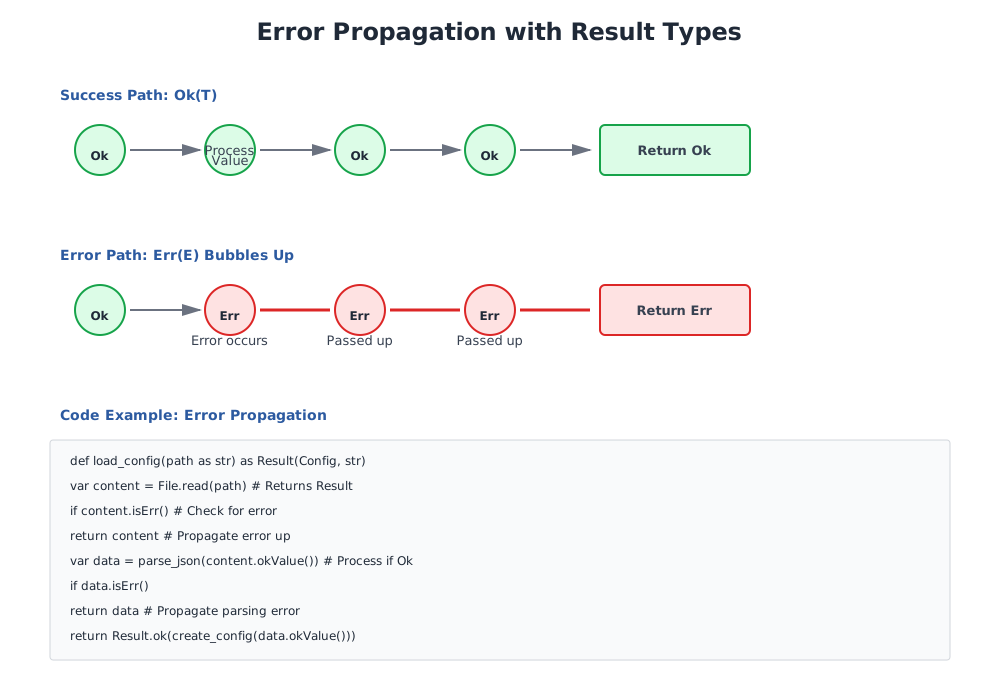
// file: 12_error_propagation.zbr
// teaches: propagating errors // chapter: 12-Error-Handling-with-Results
class Parser     shared         def parse_config(text as str) as Result(str, str)             # Parse JSON/config             if text.len == 0                 return Result.err("Empty config")             return Result.ok("parsed")
class System     shared         def load_system(config_text as str) as Result(str, str)             var parsed = Parser.parse_config(config_text)             if parsed.isErr()                 return Result.err(parsed.errValue())
            var data = parsed.okValue()             # Continue processing             return Result.ok("System loaded")
class Main     shared         def main             var system = System.load_system("")             if system.isErr()                 print "Failed: ${system.errValue()}"             else                 print system.okValue()
Real World: API Client
// file: 12_api_client.zbr
// teaches: results in realistic code // chapter: 12-Error-Handling-with-Results
class APIClient     shared         def fetch_user(user_id as int) as Result(str, str)             if user_id <= 0                 return Result.err("Invalid user ID")             # Simulate API call             if user_id == 1                 return Result.ok("Alice")             return Result.err("User not found")
        def fetch_and_greet(user_id as int) as Result(str, str)             var user_result = fetch_user(user_id)             if user_result.isErr()                 return Result.err(user_result.errValue())
            var user = user_result.okValue()             var greeting = "Hello, ${user}!"             return Result.ok(greeting)
class Main     shared         def main             var result = APIClient.fetch_and_greet(1)             print result.unwrapOr("Error: Could not greet")
Exercises
Exercise 1: Safe String to Int
Solution
class Parser
    shared         def string_to_int(text as str) as Result(int, str)             if text.len == 0                 return Result.err("Empty string")             # Real impl would parse digits             if text == "abc"                 return Result.err("Not a number")             return Result.ok(42)
class Main     shared         def main             var r1 = Parser.string_to_int("42")             var r2 = Parser.string_to_int("abc")             print r1.unwrapOr(0)             print r2.unwrapOr(0)
Next Steps
- → 13-Generics — Type-safe containers - → 15-Pipelines — Chain operations gracefully
Key Takeaways
- Result(T, E) — Either value or error - Check before unwrapping — Use isOk(), isErr() - Propagate errors — Pass them up the call stack - unwrapOr() — Safe default fallback - Errors are values — Not exceptions
Next: Head to 13-Generics for type-safe abstractions.